 Maysville, Kentucky
The Gardens
Built with intention. Built for permanence.
Landscape & Architecture
A landscape designed around a journey.
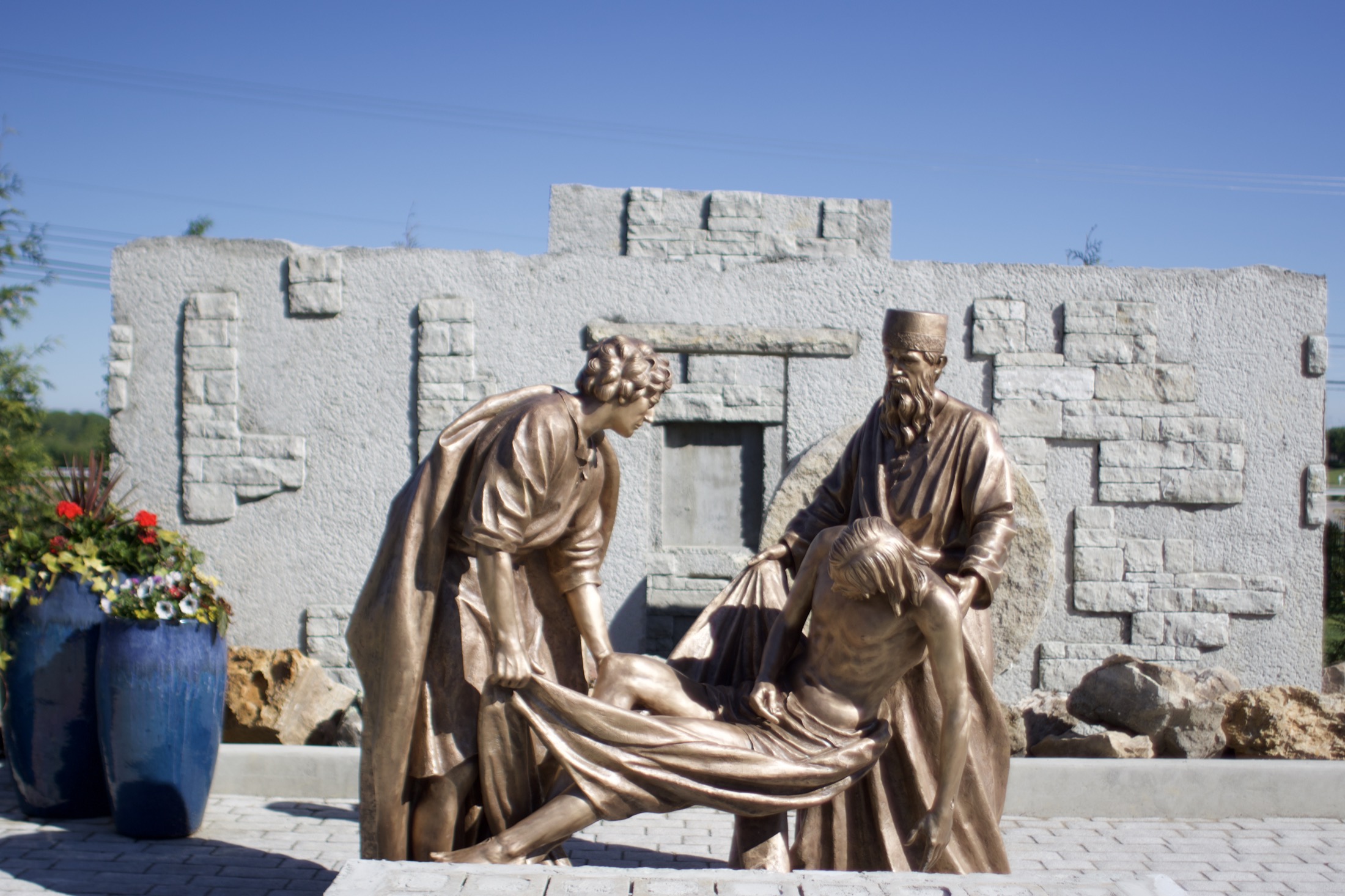
The Gardens at St. Patrick’s did not happen by accident. Every path, every sight line, every placement of stone and bronze was considered.
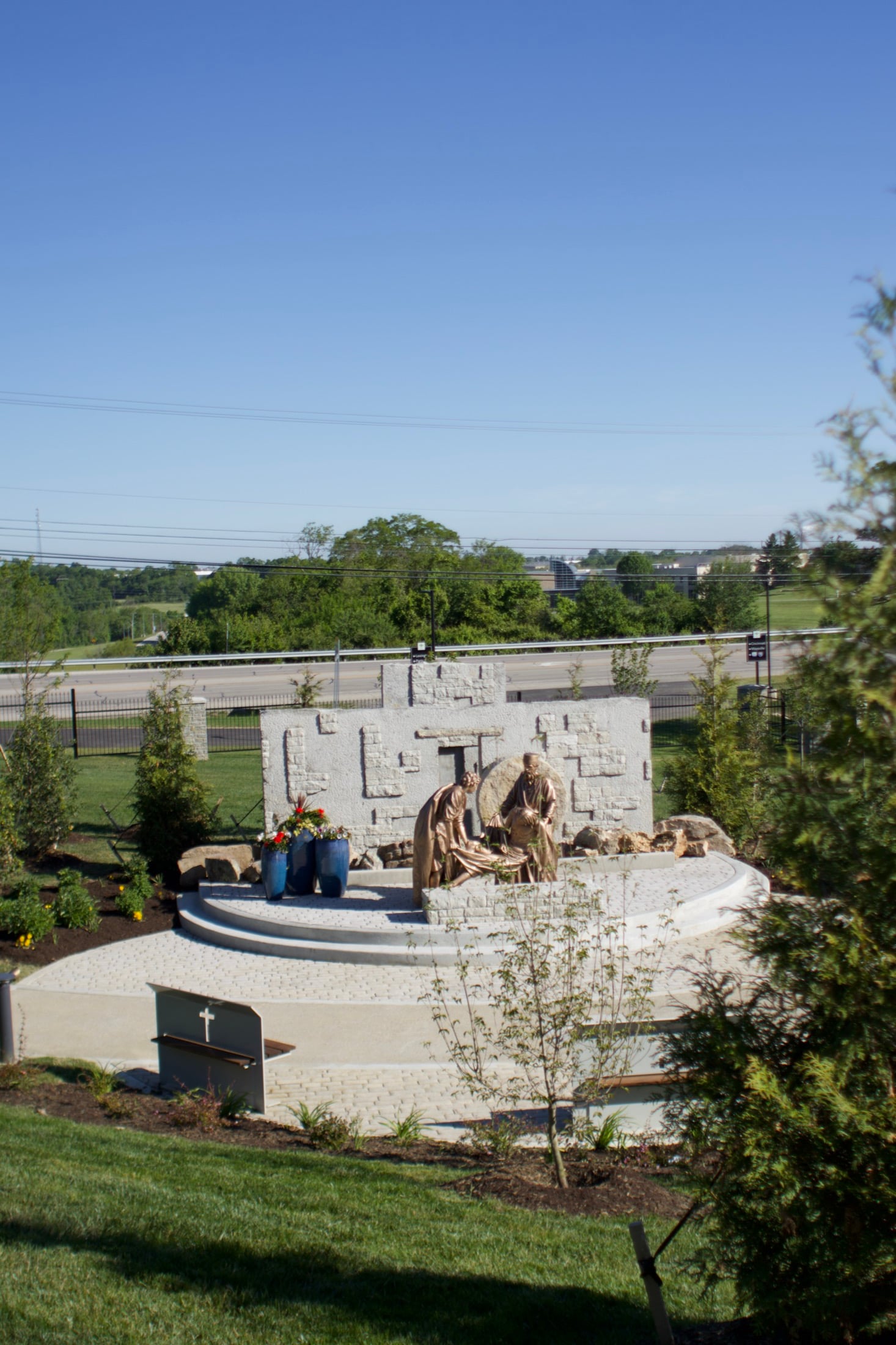
The six-acre site was designed so that the walk itself becomes part of the experience. The path does not move in a straight line. It turns, descends, and opens. Each station arrives at the moment the landscape is ready to receive it. The grounds incorporate native plantings, stone pathways, bridges over natural streams, and open garden areas that frame the sculptures without competing with them. The result is a site that feels grown rather than built.
Landscape architect or designer credit, design intent documentation, and construction timeline are pending client confirmation.
Materials
Stone, garden, and bronze.
The primary materials of the Gardens are drawn from tradition: bronze for the sculptures, limestone for the paths, and the living garden that changes with every season. Nothing about the material palette is incidental. Each element was chosen to age well, to weather honestly, and to keep the focus on the figures that anchor the path.
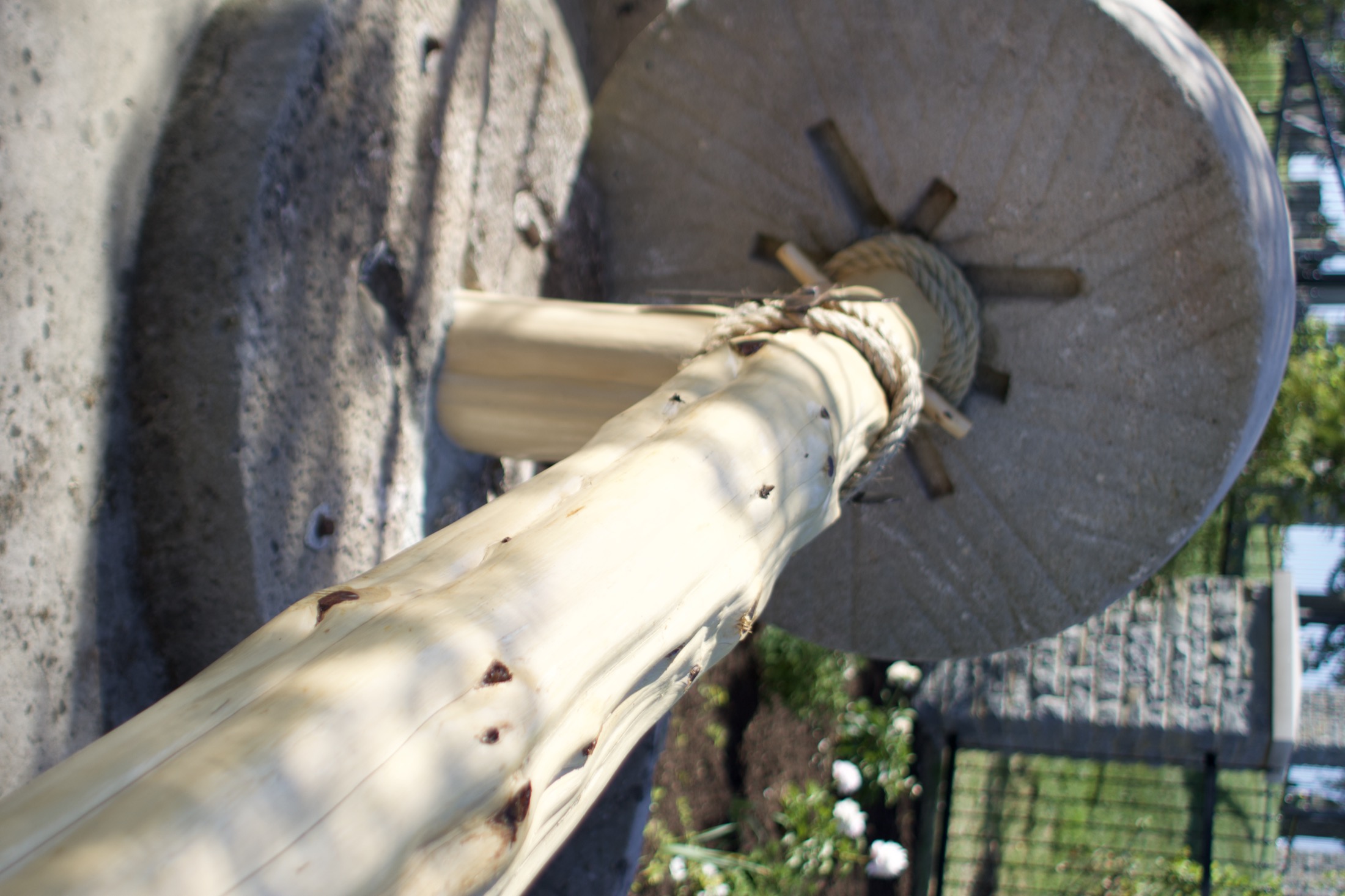
The Olive Press, seen here, is one example: stone and aged timber set to weather in place, named for the olive presses of Gethsemane.